
Why Generative AI Isn’t Killing SEO: The Real Future of Search Optimization
30/09/2025 by Onedot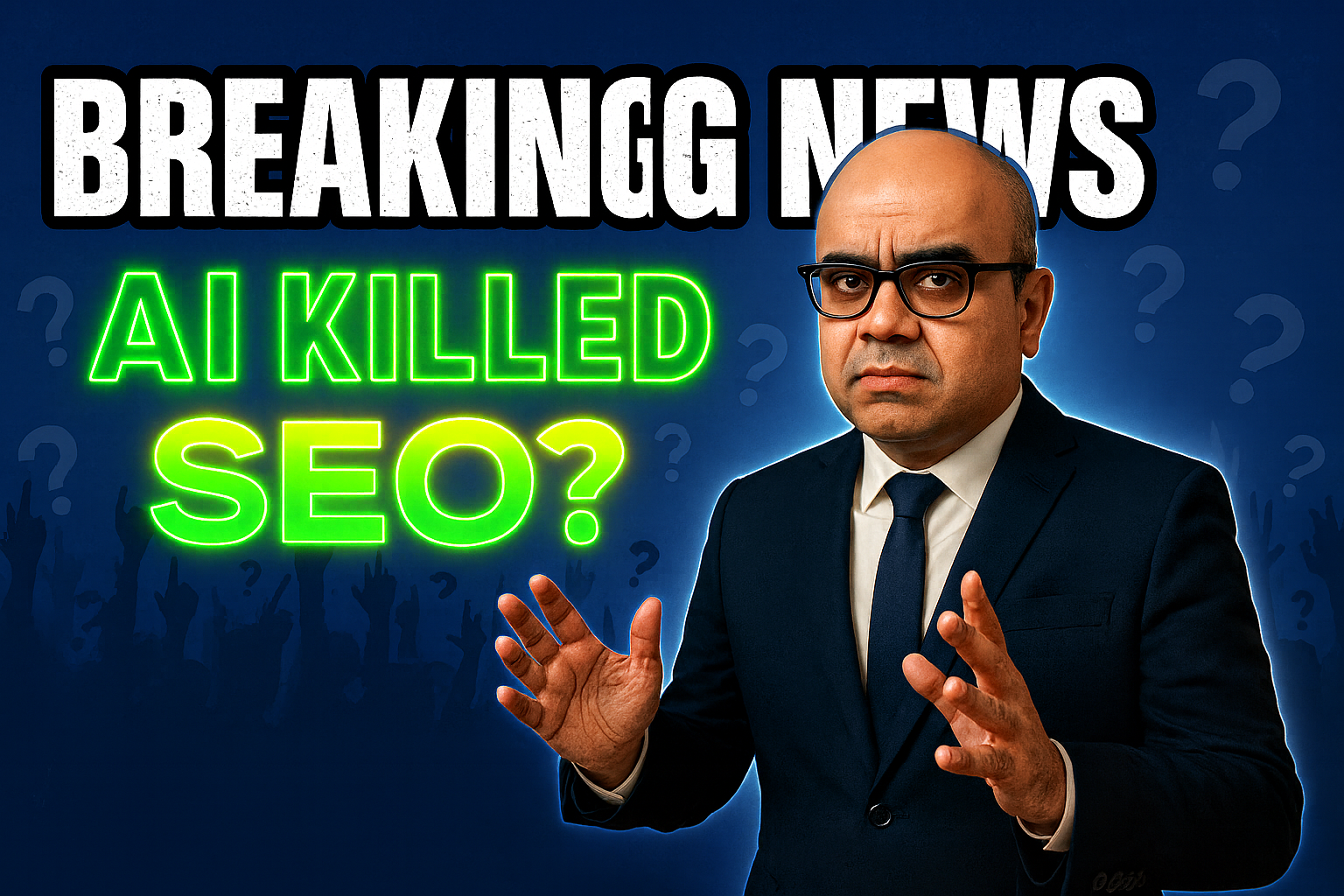
Generative AI has taken the marketing world by storm, leading to a high level of panic and confusion. What happened? Marketers and business owners started worrying that Google’s SGE and other large AI engines will keep users from ever visiting their websites. The word on the street is that “SEO is dead” -> but is it really?
Let’s talk facts. Generative AI and SEO are not going anywhere, but they are changing rapidly. In this article, we cover how AI has affected search in the last few months, why SEO is still essential, the most significant SEO misunderstandings, and how you can optimize your website for this brave new world of AI-powered search.
Also Read – Want Your Content in AI Overviews, ChatGPT & Gemini?
Introduction: The AI vs SEO Debate
In recent months, headlines about SEO and Google’s generative AI engine have been all over the place. ChatGPT for SEO is the latest sh*tstorm the marketing industry is experiencing, as panic rises through the industry. It looks like AI-powered tools like ChatGPT, Google
Gemini, and other large language models are going to answer users’ queries directly, in a conversational format, without ever linking out to websites.
On top of that, AI answers and recommendation results pop on top of SERPs, while traditional links are shifted to the second or third page. It’s a marketer’s nightmare. But, here’s the thing: SEO is not dead, but it is changing rapidly. It’s no longer the same SEO you’ve learned ten years ago, and it will keep changing as more innovations get developed.
AI has disrupted the way people search, but it also created new ways to reach your target audience with smarter, more efficient methods. Here’s how.
How Generative AI Is Changing Search
Search has changed significantly, primarily for Google and Bing (Microsoft has also introduced an AI engine, Bing Sparrow). The search engines you used to know were based on keywords and a list of links. Now, search engines that are powered by generative engines like Google AI Overviews, ChatGPT Search, and Perplexity AI show answers, recommendations, and AI-generated summaries at the top of the results page.
Here’s what you need to know:
- AI-generated summaries show above traditional listings on the first page.
- Generative engines provide direct answers, which makes it less likely that users will click through to websites. At least it feels that way initially.
- Search engines are tracking real-time user engagement signals i.e clicks, scrolls, time spent, etc.
For example, if you search for “best digital marketing strategies,” Gemini may give you a brief overview of the best techniques before listing links and websites. This means that you need to be prepared and create content so good that your information can be included in these answers and overviews.
Why SEO Is Still Essential in 2025?
SEO is not going anywhere in the foreseeable future for these key reasons:
1. You’ll Still Need to Be Visible in AI Summaries
AI generative engines are pulling information from high-quality websites. If you have great, optimized content that positions your brand as the go-to source on certain topics, there is a greater likelihood that your content will be used as an answer or part of an AI answer.
2. Website Traffic Isn’t Dead
Yes, website traffic may decrease (some sources have estimated up to 40%), but that is primarily due to less research. Once a user lands on a website, they will still navigate for products, purchase information, and services. Customers, especially those on the fence about your brand or products, need more information than a simple answer.
3. Trust and Credibility Are Key Factors
Your brand will build credibility with your audience by simply being in AI-generated answers and summaries. Trust is vital to the decision-making process. Plus, once they’ve heard of you, users will still be more inclined to visit your site before taking the next step.
4. SEO Drives Qualified Leads
SEO continues to attract and drive qualified leads to your website. Niche websites that cover more difficult topics, in particular, will likely continue to experience more organic traffic because the users will need to dig a bit deeper to find the information they are looking for.
Example comparison:
Think of AI summaries and AI-generated answers as the “front page” of a newspaper. Your brand can get recognition by simply being quoted or referenced in these sections.
Of course, not everyone who reads the summary will click out to your website. It may seem that way at first, but it is the wrong conclusion. There are always exceptions, but in general, the traffic dip is related to a smaller amount of users coming to the website for more detailed answers and information. No business wants to lose 40% of their current organic traffic, but not all that traffic is equivalent. Spend some time understanding who those lost leads are, where they were coming from on your website, and where they went when they didn’t go to your site.
The Biggest Misunderstandings About AI and SEO
There are a lot of misconceptions about AI and SEO out there. Let’s break down a few common ones:
Misconception 1: Generative AI Engines Are Going to Stop Users from Visiting Websites.
Reality: This is simply not true. Large language model-powered engines like ChatGPT Search, Google
Gemini and other companies will still be referring to websites. These AI programs need to be referencing other sources of information to appear credible. In addition, users still want more information than a simple search answer. They will continue to click on your site, even if that traffic is reduced, which you can attribute to AI.
Misconception 2: Traditional SEO Is Dead.
Reality: This is a misnomer. Traditional SEO is not dead, but SEO will keep changing and evolving. Search has changed from “links” to a search engine experience. The core principles of SEO like keyword research, technical SEO, and content optimization still matter. What has changed is how these are done.
Misconception 3: There’s Nothing You Can Do to Optimize for AI Search.
Reality: You can still optimize for AI. You need to start by taking a deep look into how AI search works. After that, optimize for user intent, structured data, and, most importantly, build authority and trust in your space.
AI engines will be rewarding websites that are not only answering questions but also have the answers that users want to hear. The websites that know their audience and serve their needs are the sites that will rank in AI answers.
How to Optimize for AI Search
SEO has never been static, and now it will keep changing and adapting as new AI-powered features get rolled out and optimized. This means that brands must be adaptable as well to stay relevant and in front of search users.
A. Focus on User Intent and Questions
AI search engines prioritize information that aligns with the user’s query. Use keyword research and other tools to understand what your audience is asking, and tailor your content to those questions.
B. Use Schema and Structured Data
Schema markup will be extremely helpful in this new AI-powered search environment. Add schema to your website to help large language model engines interpret your content, including FAQs, reviews, product schema, and more.
C. Build Authority and Trust
AI engines will be sourcing from trusted information hubs. Earn high-quality backlinks and be cited on other websites and blogs in your space. Do the hard work to get seen as an authority.
D. Optimize for Featured Snippets, AI Summaries, and AI Answers
Optimizing for Featured Snippets is good, but you need to take it a step further to optimize for AI. Write brief, direct answers to questions that your audience will be searching for. Use bullet points, tables, and distinct headers to break up your content.
E. Update Your Website
AI search engines favor relevant, updated content. Keep all of your content fresh and regularly updated to keep it relevant.
F. Leverage AI
AI search is not just about optimizing for AI engines – it’s also about using AI platforms and tools to optimize your website for humans and SEO. AI-powered tools are powerful means to conduct search analysis, optimization, and personalization.
For example, a chart that shows the difference between “Traditional SEO” vs. “AI-Optimized SEO” could look something like this:
Traditional SEO vs AI-Optimized SEO
| Traditional SEO | AI-Optimized SEO |
|---|---|
| Focused mainly on keywords and matching search terms | Focused on user intent & contextual queries |
| Heavy reliance on backlinks for authority | Emphasis on topical authority & trust signals across the web |
| Optimizing for blue link rankings in SERPs | Optimizing for AI summaries, snippets, and conversational answers |
| Structured around static meta tags, titles, H1/H2s | Structured with schema markup, FAQs, product data, and entity SEO |
| Content created for search engine crawlers | Content tailored for human engagement + AI comprehension |
| Strategy driven by volume of traffic | Strategy driven by quality of engagement (CTR, dwell time, scrolls, shares) |
| Updates were periodic (quarterly or yearly audits) | Requires constant updates & freshness to stay relevant in AI answers |
| Competed mainly in Google & Bing SERPs | Competes in Google AI Overviews, ChatGPT Search, Perplexity, Gemini, and beyond |
| Optimization stops after publishing | Continuous feedback loop with AI engines (adjust content as AI logic changes) |
| Measured by clicks & conversions | Measured by visibility in AI answers, trust mentions, engagement, and conversions |
The Future of SEO: What Marketers Should Do Next
SEO is dead, and it never died, ever. As a discipline, SEO has always been about the process. It’s never been a simple “checklist”. While this may change the way you approach SEO, it is important to note that this “new SEO” will still need to keep up with constant change and the usual data-driven feedback cycles.
Here’s what marketers need to do to stay on top of SEO:
1. Continue to Invest in Content Quality
AI can and will write content for businesses, but only unique, insightful, and well-researched content will ever stand out. This is not only from an SEO point of view, but also for a long-term content strategy.
2. Keep an Eye on How AI Search Engines Are Displaying Answers
It’s going to take a while for these engines to settle down. Google AI Overviews and ChatGPT Search change their algorithm (read AI logic and coding) daily. It’s up to you to keep up with how the results are being shown.
3. Educate Your Marketers and Writers
SEO needs to be understood across all departments of a company. No business wants to train their marketing and writers on SEO only for those changes to never stop and they are left in the dust. You can’t continue to do things the same way as you did ten years ago.
4. Measure Engagement, Not Just Clicks and Conversions
Engagement is just as important in AI, especially in AI search. You should be looking at data beyond clicks and conversions. Take a deeper look at how people are engaging with your content. Time on site and CTR (click-through rate) are also important KPIs to track.
5. Always Stay Agile
SEO is not going to stop evolving anytime soon. The entire concept will shift regularly, whether the changes are driven by Google (AI) or not. When it comes to your SEO, be prepared to be agile and pivot if you need to.
Conclusion
SEO is dead but not dead, as generative AI and AI search haven’t killed SEO. In fact, SEO is still very much alive and kicking. There is a new form of SEO on the rise, and this is a discipline that is here to stay, but in an AI-driven search world, SEO is going to look very different than it has in the past.
SEO is not a checklist anymore. It’s now a continuous data-driven process that should be ingrained in your long-term content strategy. As with every change, marketers and businesses must be adaptable to the ever-changing times.
Key takeaways:
- Generative AI and SEO are not enemies. They are two sides of the same coin in this new search environment.
- SEO vs AI is the wrong battle for marketers to be in. Both can (and should) be used to reach customers in this new search era.
- SEO is going to continue to be just as important to a brand as it ever has been. In fact, SEO is going to get more important in the years to come. The future of SEO is intent-driven, authoritative, optimized for AI, and rich with voice search activity.
Onedot Media is here to help you manage this new world of search. Our SEO experts and AI engine analysts can help your brand stay ahead of the curve and in front of search users, both in AI and on your website.
